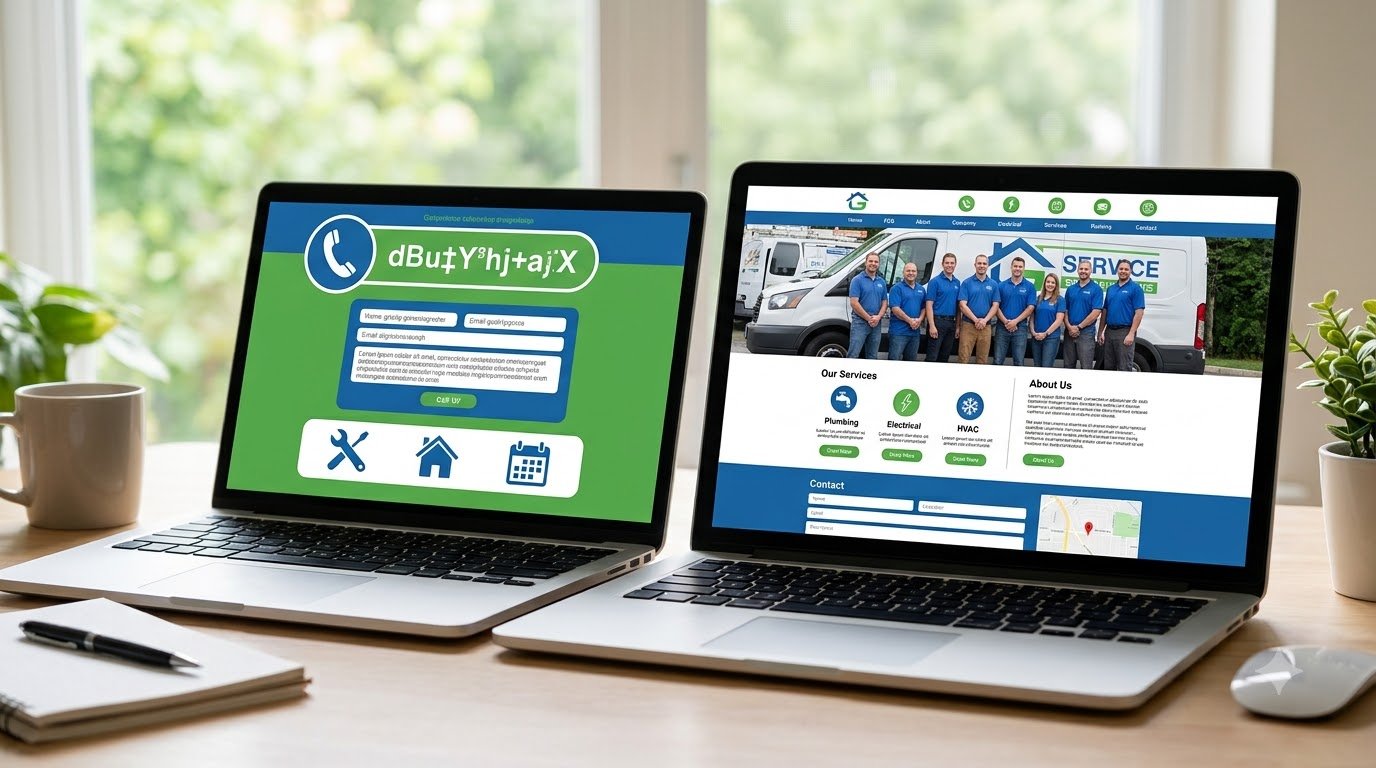
You launch a Google Ads campaign.
Your keywords are selected.
Your location targeting is ready.
Your ads are written.
Conversion tracking is installed.
Then one important question decides what happens next:
Where should your paid traffic go?
Should visitors land on your homepage?
Or should they go to a dedicated landing page created specifically for that campaign?
Many businesses automatically send Google Ads traffic to their homepage because it already contains:
- Company information
- Services
- Reviews
- Contact details
- Navigation options
However, paid search visitors usually arrive with a specific goal.
Someone searching:
“emergency plumber near me”
is not looking for a general company introduction.
They want to quickly know:
- Do you provide emergency plumbing?
- Do you serve my area?
- Can you solve my problem?
- How can I contact you?
A dedicated landing page can reduce unnecessary steps by continuing the exact conversation started by the search and advertisement.
That does not mean every campaign needs a separate landing page.
The correct choice depends on:
- Search intent
- Campaign structure
- Service type
- Location targeting
- Conversion goals
- Existing website quality
Quick Decision: Homepage or Google Ads Landing Page?
| Situation | Better Option |
| Brand name search | Homepage |
| One specific service campaign | Dedicated landing page |
| Specific city/service targeting | Location-service landing page |
| Multiple services | Dedicated pages usually help |
| Broad business search | Homepage may work |
| Special offer campaign | Offer-specific landing page |
The best destination is the page that creates the smoothest journey from:
Search → Ad → Website → Conversion
How Growth Star Digital Helps Improve Google Ads Conversion Performance
Google Ads success is not only about getting clicks.
The real goal is turning paid traffic into qualified opportunities.
Growth Star Digital helps businesses improve the connection between:
- PPC campaigns
- Landing pages
- Website experience
- Conversion tracking
- Analytics
- Lead quality
A strong advertising strategy requires both:
Getting the right visitors
and
Giving them the right next step.
What Is The Difference Between A Homepage And A Google Ads Landing Page?
What Is A Homepage?
A homepage introduces the entire business.
It usually explains:
- Who the company is
- Main services
- Areas served
- Reviews
- Credentials
- Company information
- Contact options
A homepage is designed to serve different types of visitors.
Someone may visit because they want:
- General information
- Multiple services
- Company details
- Trust verification
What Is A Google Ads Landing Page?
A dedicated landing page is built around one specific campaign goal.
It usually focuses on:
- One service
- One customer problem
- One location
- One offer
- One conversion action
Instead of making visitors search through multiple pages, it gives them the information needed to make a decision.
Why Google Ads Landing Pages Matter For Paid Traffic
The Click Is Only The Beginning
A Google Ads click does not automatically create a lead.
The visitor has already shared information through their search.
Example:
Search:
“AC repair in Edison NJ”
The user has already communicated:
- Service needed: AC repair
- Location: Edison
- Intent: Find a local provider
A strong landing page should continue that same message.
Message Match Improves User Experience
A strong journey looks like:
Search:
Emergency plumber Jersey City
↓
Ad:
Emergency Plumbing Services Jersey City
↓
Landing Page:
Emergency Plumbing Services In Jersey City
↓
CTA:
Request Emergency Service
Every step confirms that the visitor reached the right place.
Google Ads Landing Page vs Homepage Comparison
| Factor | Homepage | Landing Page |
| Purpose | Explain entire business | Convert specific traffic |
| Services | Multiple | Usually one focus |
| Navigation | Broad | More focused |
| Message | General | Highly specific |
| Search intent match | Depends | Usually stronger |
| Testing | Limited | Easier |
| CTA | Multiple options | Primary action |
When Should Google Ads Traffic Go To A Dedicated Landing Page?
When The Campaign Targets A Specific Service
Example:
A company offers:
- Plumbing
- HVAC
- Electrical
- Remodeling
But the campaign targets:
“Emergency plumbing service near me”
Sending users to a general homepage creates extra work.
A dedicated page can focus on:
- The exact service
- Customer problem
- Process
- Reviews
- FAQs
- Contact options
When The Campaign Targets A Specific Location
Local businesses often advertise across multiple areas.
A homepage saying:
“Serving New Jersey”
may not fully answer someone searching:
“Roof repair in Newark NJ”
A location-focused page can clarify:
- Service availability
- Local relevance
- Customer expectations
- Contact process
When The Advertisement Promotes A Specific Offer
If an ad promotes:
Free Roof Inspection
the landing page should clearly explain:
- What is included
- Who qualifies
- How to claim it
- What happens next
The landing page should deliver the same promise made in the advertisement.
When Lead Quality Matters More Than Lead Volume
A landing page can also help qualify visitors.
Example:
A commercial-only service provider can clearly state:
“We work with commercial properties only.”
Some visitors may leave.
That is not necessarily a problem.
Those visitors were not the right audience.
When Can A Homepage Work For Google Ads?
Branded Search Campaigns
Someone searching your company name already knows your brand.
They may want:
- Reviews
- Contact details
- Locations
- General information
A homepage can work well here.
Businesses With One Main Service
If a homepage already focuses on:
- One service
- One audience
- One clear offer
a separate landing page may not provide much additional value.
Broad Searches
A search like:
“HVAC company near me”
is broader than:
“emergency furnace repair near me”
A strong homepage may satisfy broader visitors who want to explore multiple options.
What Should A High-Converting Google Ads Landing Page Include?
A Specific Headline
The headline should immediately confirm relevance.
Better:
Emergency Plumbing Services In Jersey City
Instead of:
Solutions You Can Trust
A Clear Value Proposition
Explain:
- Why choose you
- What you provide
- What makes your service different
Useful details may include:
- Experience
- Availability
- Specialization
- Certifications
- Process
One Primary Conversion Goal
Choose the main action:
- Call Now
- Request Quote
- Schedule Service
- Book Consultation
Avoid overwhelming users with multiple unrelated actions.
Trust Signals
Include relevant proof:
- Reviews
- Testimonials
- Certifications
- Experience
- Project examples
- Guarantees
What Is The Difference Between A Google Ads Landing Page And An SEO Service Page?
Many businesses confuse landing pages with normal website service pages.
Both can explain services, but their purpose is different.
Google Ads Landing Page
A PPC landing page is designed mainly for paid traffic.
Its goal is:
Get the visitor to take one specific action.
Examples:
- Request a quote
- Schedule an appointment
- Call the business
- Book a consultation
A landing page usually removes unnecessary distractions and keeps the visitor focused on conversion.
SEO Service Page
An SEO service page is designed to rank organically and educate visitors.
It may include:
- Detailed service information
- Multiple FAQs
- Internal links
- Supporting content
- Different customer questions
A service page can attract visitors at different stages of the buying journey.
Should You Send Google Ads Traffic To Your Homepage Or Landing Page?
There is no universal answer.
The correct choice depends on:
- Campaign intent
- Visitor expectations
- Business model
- Conversion goal
- Website structure
The best destination is the page that creates the shortest path between:
Customer Problem → Solution → Action
How Google Ads Landing Pages Affect Conversion Performance
Landing Pages Influence More Than Just Conversions
A landing page can affect:
- User experience
- Ad relevance
- Conversion rate
- Cost efficiency
- Lead quality
When visitors immediately find information matching their search, they are more likely to continue exploring.
Common Landing Page Mistakes That Reduce Google Ads Results
Mistake 1: Sending Every Ad To The Homepage
A homepage is designed for many audiences.
Paid visitors usually have a specific purpose.
Example:
Someone searching:
“roof replacement contractor near me”
does not want to browse a company introduction first.
They want:
- Roof replacement information
- Service area confirmation
- Reviews
- Contact option
Better Approach
Create pages based on:
- Service
- Location
- Customer intent
- Campaign goal
Example:
Instead of:
Homepage
↓
Use:
Roof Replacement In Orlando
Landing Page
Mistake 2: Using The Same Landing Page For Every Campaign
Different searches represent different customer needs.
Example:
Campaign 1:
“Emergency AC Repair”
Campaign 2:
“HVAC Installation”
Both are HVAC services, but the visitor intent is different.
Each campaign should ideally match a page designed for that specific need.
Mistake 3: Too Many Conversion Options
A common problem is giving visitors too many choices:
- Call
- Read blog
- Download guide
- Follow social media
- View all services
This creates decision friction.
A strong Google Ads landing page should have one primary goal.
Mistake 4: Weak Message Match
The advertisement creates an expectation.
The landing page must confirm it.
Example:
Ad:
“Same-Day Garage Door Repair”
Landing page:
“Complete Home Improvement Services”
The visitor may wonder:
“Did I click the wrong result?”
Mistake 5: Ignoring Mobile Visitors
Many local service searches happen on mobile devices.
A mobile landing page should have:
- Easy-to-read text
- Fast loading speed
- Simple navigation
- Visible contact button
- Easy form completion
A visitor should not struggle to contact the business.
How To Test Whether Your Landing Page Is Working
Track More Than Conversion Rate
A landing page with many conversions is not always successful.
You should also measure:
- Lead quality
- Qualified inquiries
- Sales opportunities
- Customer acquisition cost
- Revenue generated
30-Day Google Ads Landing Page Testing Plan
Week 1: Review Current Performance
Analyze:
- Traffic sources
- Conversion rate
- Lead quality
- Bounce rate
- User behavior
Week 2: Test Messaging
Review:
- Headline
- Main offer
- Service explanation
- Trust signals
The goal is improving relevance.
Week 3: Test Conversion Elements
Experiment with:
- CTA wording
- Form length
- Contact placement
- Page structure
Week 4: Review Business Results
Do not judge only by clicks.
Compare:
- Qualified leads
- Sales conversations
- Revenue impact
The winning page is the one that creates better business results.
Homepage Optimization For Google Ads Traffic
If you decide to use your homepage, make sure it supports paid visitors.
A strong homepage should clearly show:
Who You Are
Visitors should immediately understand:
- Business type
- Service area
- Main offering
What You Offer
Avoid forcing users to search through menus.
Important services should be visible.
Why Customers Trust You
Include:
- Reviews
- Experience
- Certifications
- Testimonials
- Results
How To Contact You
Make conversion options easy:
- Phone number
- Contact form
- Booking button
Google Ads Destination Checklist
Before sending traffic anywhere, ask:
Search Intent
☐ Does this page match what the user searched for?
Message Match
☐ Does the page continue the ad message?
Conversion
☐ Is the next action obvious?
Trust
☐ Does the page prove credibility?
User Experience
☐ Does it work smoothly on mobile?
How Local Businesses Should Choose
Home Service Businesses
Examples:
- Plumbing
- Roofing
- HVAC
- Electrical
Usually benefit from:
- Service-specific pages
- Location-focused pages
- Clear lead forms
Professional Services
Examples:
- Law firms
- Accountants
- Consultants
Often need:
- Trust-building content
- Detailed service pages
- Strong consultation CTAs
Multi-Service Businesses
Businesses offering many services should avoid sending all traffic to one general page.
Different campaigns usually need different destinations.
Growth Star Digital Approach: Connecting Ads With Better Conversion Paths
A successful Google Ads strategy requires more than campaign setup.
Businesses need alignment between:
- Keyword targeting
- Ad messaging
- Landing pages
- Tracking
- Lead qualification
Growth Star Digital helps businesses analyze where paid traffic enters the website and how effectively that traffic turns into meaningful opportunities.
Final Decision Framework: Homepage Or Landing Page?
Choosing between a homepage and a dedicated landing page becomes easier when you understand the visitor’s intent.
The question is not:
“Which page is better?”
The better question is:
“Which page helps this visitor make a decision faster?”
Use A Homepage When:
1. The User Searches For Your Brand
Example:
“Growth Star Digital”
The visitor already knows your business.
They may want:
- Company information
- Services
- Reviews
- Contact details
- About page
A homepage can work well because the visitor is exploring the brand.
2. Your Business Has One Main Service
If your entire business focuses on one clear service, your homepage may already function like a landing page.
Example:
A company offering only:
- Roof replacement
- Emergency plumbing
- Dental implants
may not need multiple campaign-specific pages.
3. The Search Intent Is Broad
Broad searches often need more exploration.
Example:
“Digital marketing agency”
The user may want to compare:
- Services
- Experience
- Pricing approach
- Industries served
A homepage can provide a broader overview.
Use A Dedicated Landing Page When:
1. The Search Is Highly Specific
Example:
“Commercial HVAC repair Dallas”
The visitor has a clear problem.
A dedicated page can immediately show:
- Relevant service
- Location
- Experience
- Contact option
2. The Campaign Targets One Service
If your Google Ads campaign promotes one offer, the landing page should focus on that offer.
Examples:
Google Ad:
“Free Kitchen Remodeling Estimate”
Landing Page:
“Kitchen Remodeling Services”
The visitor should not have to search for the information.
3. You Want Better Lead Quality
A dedicated landing page can help qualify visitors by explaining:
- Ideal customers
- Service limitations
- Locations served
- Project requirements
This can reduce irrelevant inquiries.
Google Ads Landing Page Optimization Checklist
1. Match The Search Intent
The visitor should immediately understand:
- They reached the correct page
- Their problem can be solved
- Your business serves their needs
2. Create A Strong Headline
Weak:
“Welcome To Our Company”
Better:
“Emergency Plumbing Services In Tampa Available 24/7”
The headline should reflect the visitor’s search.
3. Add Clear Benefits
Explain:
- What you provide
- Why customers choose you
- What makes your service different
Avoid only listing features.
4. Use Trust Signals
Include:
- Reviews
- Testimonials
- Certifications
- Years of experience
- Customer results
Trust reduces hesitation.
5. Keep The Conversion Path Simple
The visitor should know the next step.
Examples:
- Request Quote
- Schedule Consultation
- Call Now
- Book Service
Frequently Asked Questions
Should Google Ads Always Use A Landing Page Instead Of A Homepage?
No.
The right choice depends on campaign intent.
Specific service campaigns often benefit from dedicated landing pages, while branded or broad campaigns may work well with a homepage.
Does A Dedicated Landing Page Always Increase Conversions?
Not automatically.
A landing page performs well when it has:
- Strong message match
- Relevant content
- Clear CTA
- Good user experience
- Proper targeting
A poorly designed landing page can perform worse than a strong homepage.
Can I Use My Existing Website Pages For Google Ads?
Yes.
If an existing service page already matches:
- Search intent
- Ad message
- User expectations
it may work effectively.
Creating a new landing page is not always necessary.
How Many Landing Pages Should A Google Ads Campaign Have?
There is no fixed number.
The number depends on:
- Services offered
- Locations targeted
- Campaign structure
- Customer intent
Different audiences often need different pages.
What Is More Important: Traffic Or Landing Page Quality?
Both matter.
Good targeting brings the right visitors.
A strong landing page helps convert those visitors.
Google Ads performance depends on the complete journey:
Keyword → Ad → Landing Page → Conversion → Customer
Google Ads Conversion Optimization Checklist
Before launching or improving a campaign:
Campaign
☐ Keywords match customer intent
☐ Locations match service areas
☐ Ads clearly describe the offer
Landing Page
☐ Page matches the advertisement
☐ Main service is obvious
☐ CTA is easy to find
☐ Trust signals are visible
☐ Mobile experience is strong
Tracking
☐ Conversions are measured correctly
☐ Lead quality is reviewed
☐ Sales feedback is collected
Business Results
☐ Qualified leads are tracked
☐ Revenue impact is measured
☐ Campaign decisions are based on business outcomes
How Growth Star Digital Helps Businesses Improve Google Ads Performance
Building A Better Path From Clicks To Customers
Successful Google Ads campaigns require more than generating traffic.
Businesses need a complete conversion system:
- Right audience targeting
- Relevant ad messaging
- Effective landing pages
- Accurate tracking
- Better lead qualification
Growth Star Digital helps businesses improve the connection between advertising campaigns and customer actions by focusing on measurable growth rather than only clicks or form submissions.
Final Thoughts: Send Google Ads Traffic To The Page That Matches The Customer Journey
There is no universal winner between a homepage and a landing page.
The right choice depends on what the visitor is trying to accomplish.
A homepage works when users need to understand your brand.
A dedicated landing page works when users have a specific problem and need a focused solution.
The best Google Ads strategy creates alignment between:
✅ Search intent
✅ Advertisement message
✅ Landing page experience
✅ Conversion goal
When every step feels connected, paid traffic becomes more valuable and businesses can generate better-quality opportunities.