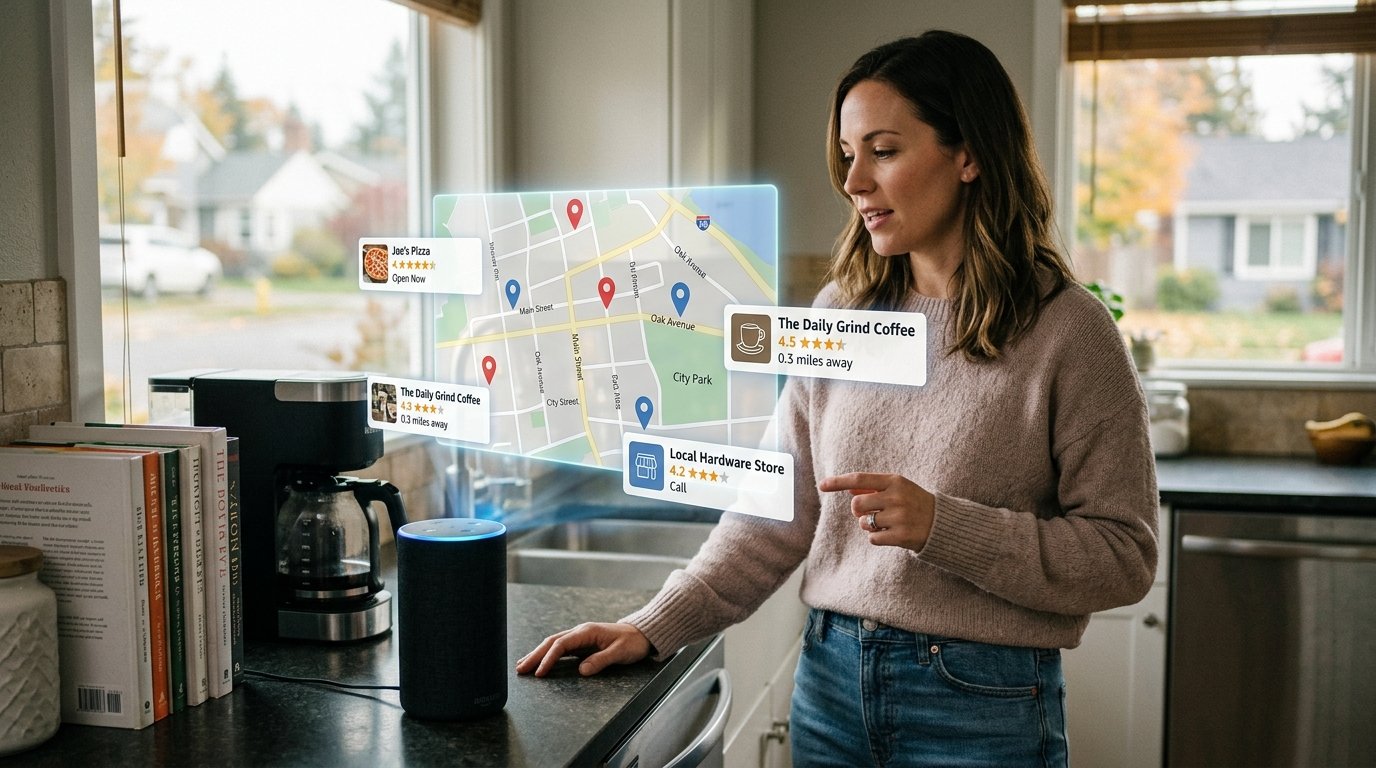
The way people search online is changing rapidly. Typing queries into search engines is no longer the only way users find information. With the growing popularity of smartphones, smart speakers, virtual assistants, and AI-powered devices, voice search has become a significant part of everyday life.
Consumers now ask questions naturally using devices powered by Google Assistant, Siri, Alexa, and other voice-enabled technologies. As a result, businesses must adapt their digital marketing strategies to meet changing user behavior.
For local businesses, this shift presents a major opportunity. Optimizing for voice search local SEO can help companies attract more nearby customers, improve search visibility, and stay ahead of competitors.
In this article, we’ll explore the latest voice search trends, explain why voice search matters for local businesses, and provide actionable strategies for effective local SEO voice optimization.
What Is Voice Search?
Voice search allows users to perform internet searches by speaking instead of typing. Using natural language processing (NLP) and artificial intelligence (AI), voice assistants understand spoken queries and deliver relevant results.
Examples of voice searches include:
“Where is the best pizza restaurant near me?”
“Find a digital marketing agency nearby.”
“What time does the pharmacy close today?”
“Who offers emergency plumbing services in my area?”
Unlike traditional text searches, voice searches are typically longer, more conversational, and often location-based.
This evolution in search behavior is transforming how businesses approach SEO.
The Growing Popularity of Voice Search
Voice-enabled technology has become increasingly integrated into daily life. Smartphones, smart speakers, cars, televisions, and wearable devices now support voice commands.
Key Voice Search Trends Driving Growth
Several factors are accelerating voice search adoption:
1. Increased Smartphone Usage
Most consumers carry smartphones everywhere, making voice searches convenient while driving, walking, shopping, or multitasking.
2. Smart Speaker Adoption
Devices such as Amazon Echo and Google Nest have introduced millions of households to voice-first interactions.
3. Improved AI Technology
Modern voice assistants have become more accurate at understanding accents, natural language, and complex questions.
4. Faster Mobile Internet
High-speed mobile connections allow voice search users to receive instant answers and recommendations.
5. Convenience and Accessibility
Speaking is often faster than typing, especially when users need immediate information.
These voice search trends indicate that voice-based interactions will continue growing in the coming years.
Why Voice Search Matters for Local SEO
Voice search and local SEO are closely connected.
Most voice searches have local intent. Users often want nearby businesses, directions, operating hours, contact information, or service providers.
Examples include:
“Coffee shop near me”
“Best dentist in my city”
“Open grocery store nearby”
“Digital marketing agency near me”
When users perform these searches, search engines prioritize businesses that provide accurate local information and strong local SEO signals.
This makes voice search local SEO one of the most important marketing opportunities for local businesses.
How Voice Search Changes Search Behavior
Traditional search:
“best Italian restaurant NYC”
Voice search:
“What’s the best Italian restaurant near me that’s open right now?”
Notice the difference.
Voice searches are:
Longer
More conversational
Question-based
Intent-driven
Frequently location-specific
This shift means businesses must optimize content differently than they did for traditional keyword-focused SEO.
The Impact of Google Voice Search
Among all voice assistants, Google voice search plays a crucial role because Google dominates both search and mobile operating systems.
When users ask Google Assistant a question, Google typically pulls information from:
Google Business Profile
Featured snippets
Local search results
Knowledge panels
High-authority websites
Businesses that optimize these assets increase their chances of becoming the voice search result delivered to users.
Understanding Local Search Intent
Voice search users often have immediate needs.
They may want to:
Visit a nearby business
Make a purchase
Schedule an appointment
Find directions
Compare options
Contact a service provider
This intent makes voice search traffic highly valuable because users are often closer to making a decision.
For local businesses, appearing in voice search results can directly impact revenue and customer acquisition.
Essential Strategies for Local SEO Voice Optimization
To succeed in voice search, businesses must adapt their SEO strategies.
1. Optimize Your Google Business Profile
Your Google Business Profile is one of the most important factors for local visibility.
Ensure your profile includes:
Accurate business name
Address
Phone number
Website URL
Business category
Hours of operation
Photos
Customer reviews
Google relies heavily on this information when responding to local voice queries.
2. Focus on Conversational Keywords
Voice searches sound like natural conversations.
Instead of targeting only:
“SEO agency”
Consider phrases like:
“Who is the best SEO agency near me?”
“Which digital marketing agency has good reviews?”
“Where can I find SEO services nearby?”
These long-tail keywords align more closely with voice search behavior.
3. Create FAQ Content
Frequently Asked Questions (FAQ) pages perform exceptionally well for voice search.
Examples include:
What services do you offer?
How much do your services cost?
Where are you located?
What are your business hours?
Voice assistants often pull answers directly from concise FAQ content.
4. Improve Website Speed
Voice search users expect immediate answers.
A slow-loading website can negatively impact rankings and user experience.
Businesses should:
Compress images
Minimize code
Use caching
Improve server response times
Fast websites are favored by both users and search engines.
5. Optimize for Mobile Devices
Most voice searches occur on mobile devices.
Ensure your website:
Is mobile-friendly
Loads quickly
Uses responsive design
Has easy navigation
Provides clear contact information
Mobile optimization supports both traditional and voice search performance.
6. Use Structured Data Markup
Schema markup helps search engines understand your content.
Structured data can provide information about:
Business details
Reviews
Products
Services
Events
FAQs
This additional context increases the likelihood of appearing in rich search results and voice responses.
Featured Snippets and Voice Search
Featured snippets are often called “Position Zero” because they appear above standard search results.
Many voice assistants pull answers directly from featured snippets.
To improve your chances:
Answer questions clearly
Use headings and subheadings
Create concise summaries
Organize information logically
Winning featured snippets can significantly boost voice search visibility.
The Role of Reviews in Voice Search Rankings
Customer reviews influence local rankings and user trust.
Search engines view positive reviews as indicators of quality and credibility.
Encourage customers to:
Leave Google reviews
Share feedback
Rate your services
Businesses with strong review profiles often perform better in local voice search results.
Common Voice Search Optimization Mistakes
Many businesses fail to adapt because they:
Ignoring Local SEO
Voice search is heavily location-based. Neglecting local optimization limits visibility.
Using Only Short Keywords
Conversational queries require broader keyword strategies.
Outdated Business Information
Incorrect addresses, phone numbers, or hours can hurt rankings and customer experience.
Poor Mobile Experience
Voice search users often visit websites immediately after searching.
Lack of FAQ Content
Missing question-based content reduces opportunities to appear in voice results.
The Future of Voice Search and Local SEO
The future of search is increasingly conversational.
As AI technology continues improving, voice assistants will become even more accurate and personalized.
Future developments may include:
More conversational search experiences
Increased use of AI assistants
Better contextual understanding
Hyper-local search recommendations
Greater integration with smart devices
Businesses that invest in local SEO voice optimization today will be better positioned to benefit from these advancements tomorrow.
Why Businesses Should Act Now
Voice search is no longer an emerging trend—it is becoming a standard way consumers find information.
Companies that optimize early can:
Gain competitive advantages
Increase local visibility
Improve customer engagement
Generate more qualified leads
Strengthen their online presence
Ignoring voice search may result in missed opportunities as consumer behavior continues to evolve.
Final Thoughts
The rise of voice technology is reshaping digital marketing and local search. As more consumers rely on Google voice search and other voice-enabled devices, businesses must adapt their SEO strategies to remain visible and competitive.
By understanding current voice search trends, optimizing for conversational queries, improving local listings, and implementing effective local SEO voice optimization strategies, businesses can position themselves for long-term success.
At Growth Star Digital, we help businesses stay ahead of changing search behaviors through innovative SEO strategies designed for the future. The businesses that embrace voice search local SEO today will be the ones capturing tomorrow’s customers.
FAQ’S
Q: How does voice search differ from traditional search when it comes to local SEO?
A: Voice search queries are typically longer, more conversational, and often include local intent, such as finding nearby businesses or services. Unlike traditional keyword-focused searches, voice searches sound like natural questions. Growth Star Digital recommends optimizing content for conversational phrases and location-based queries to improve visibility in voice search results.
Q: Why is Google Business Profile important for voice search local SEO?
A: Google often uses information from Google Business Profiles when responding to local voice search queries. Accurate business details such as address, phone number, operating hours, website URL, and customer reviews help search engines provide reliable answers. Growth Star Digital advises businesses to keep their profiles updated to maximize local search visibility.
Q: Can FAQ pages help a business rank better in voice search results?
A: Yes, FAQ pages are highly effective for voice search optimization because they directly answer common customer questions in a clear and concise format. Voice assistants frequently pull information from well-structured FAQ content. Growth Star Digital encourages businesses to create question-based content that aligns with how people naturally speak when using voice search.
Q: How do customer reviews influence voice search rankings for local businesses?
A: Positive customer reviews help build credibility and signal quality to search engines. Businesses with strong review profiles are more likely to appear in local search results and voice search recommendations. Growth Star Digital recommends actively encouraging satisfied customers to leave reviews to strengthen local SEO performance and trustworthiness.